
LiftMaster Security+ 2.0 Tri-Band vs Legacy 390 MHz Opener Systems
Legacy single-frequency 390 MHz garage door openers (Green and Red Learn buttons) lose range near military bases operating 380-399.9 MHz DoD LMR systems under 47 CFR 15.231. Compare Yellow Learn tri-band hopping against legacy units. Review the full attribute comparison matrix, applicability limits, and cited regulatory thresholds between Security+ 2.0 (Yellow Learn) and Legacy 390 MHz (Green/Red) below before ordering out-of-warranty hardware.
- Operating RF Band
- 310 / 315 / 390 MHz Tri-Band vs 390 MHz Single-Channel
- Production Years
- 2011 - 2026 (Yellow Learn) vs 1993 - 2005 (Green/Red Learn)
- FCC Transmission Rule
- 47 CFR 15.231 (<= 5s manual burst) vs 47 CFR 15.231 (<= 5s manual burst)
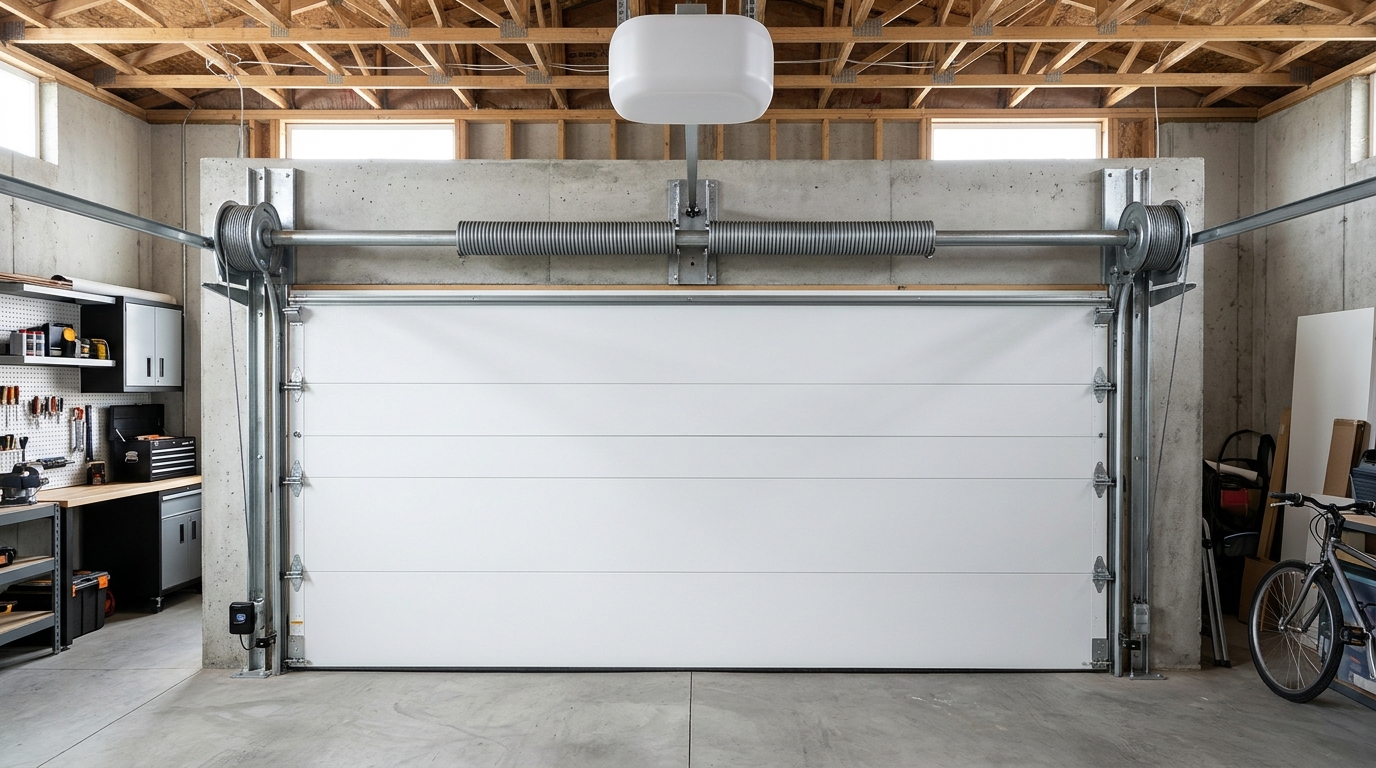
What physical, spectrum, or door-prep standards distinguish these specs?
Side-by-side engineering schematic comparing refrigerant recovery clearances, RF trunk interference spectra, or North American deadbolt cross-bore tolerances.
How do Security+ 2.0 (Yellow Learn) and Legacy 390 MHz (Green/Red) differ across key attributes?
Attribute-by-attribute specification matrix contrasting cycle counts, regulatory caps, statutory applicability, and field service procedures with primary citations.
| Specification / Attribute | Security+ 2.0 (Yellow Learn) | Legacy 390 MHz (Green/Red) |
|---|---|---|
| Operating RF Band | 310 / 315 / 390 MHz Tri-Band [Respective Equipment Manufacturers] | 390 MHz Single-Channel |
| Production Years | 2011 - 2026 (Yellow Learn) | 1993 - 2005 (Green/Red Learn) |
| FCC Transmission Rule | 47 CFR 15.231 (<= 5s manual burst) [Federal Communications Commission (FCC) / eCFR] | 47 CFR 15.231 (<= 5s manual burst) [Federal Communications Commission (FCC) / eCFR] |
| DoD 380-399.9 MHz Immunity | High (310/315 MHz fail-over) | Blocked near military LMR towers [Federal Communications Commission (FCC) / eCFR] |
| Photo-Eye Height (16 CFR 1211) | <= 6 inches above garage floor [U.S. Consumer Product Safety Commission / eCFR] | <= 6 inches (mandatory post-1993) [U.S. Consumer Product Safety Commission / eCFR] |
| Reversal Time Limit | <= 2 seconds upon obstruction [U.S. Consumer Product Safety Commission / eCFR] | <= 2 seconds upon obstruction [U.S. Consumer Product Safety Commission / eCFR] |
| CA SB-969 Battery Mandate | Integrated DC battery ($1,000 fine if omitted) [California State Legislature] | Legacy models lack integrated DC backup |
| HomeLink Pre-2013 Vehicle | Requires Compatibility Bridge repeater | Direct visor programming supported |
When does Security+ 2.0 (Yellow Learn) apply over Legacy 390 MHz (Green/Red)?
Required near military bases with 390 MHz blackouts; simultaneous 310/315/390 MHz packets bypass narrowband DoD LMR noise and meet CA SB-969 battery rules on newer motors.
When does Legacy 390 MHz (Green/Red) apply over Security+ 2.0 (Yellow Learn)?
Pre-2005 systems remain compliant only if post-1993 16 CFR 1211 photo-eyes sit <= 6 inches off the floor and reverse within 2 seconds.
What quantitative rule settles the choice between both specs?
47 CFR 15.231 permits <= 5 sec transmission bursts on secondary status (must accept federal DoD LMR interference); CA SB-969 imposes $1,000 fines on non-battery replacements.
What are the limitations of ENERGY STAR chassis lists?
ENERGY STAR catalog pages benchmark annual kWh draw and capacity across 8 certified residential chassis and exclude non-certified budget models, commercial NSF units, and live retail stock prices.
Who should NOT rely on this list
- Who should NOT rely on residential kWh tables: commercial kitchens and coin-op laundries require industrial ratings.
- Not a substitute for tape measurement: verify cutout width, door swing, and 1-2 inches rear condenser airflow clearance.
- Not a parts store: finish suffixes collapse onto one appliance models, and regional retail availability varies.
Which option fits your situation?
- High electricity rate states: Target top-quartile lowest-kWh models to maximize 10-year EIA utility savings.
- Tight 24-inch or 33-inch alcove swap: Match exact cutout width first, then compare peer energy density.
- Out-of-warranty repair decision: Look up your appliance models kWh and run the 50% repair-vs-replace calculation.
FAQ
Clear answers to 8 common repair, safety, cost, and licensing questions backed by official government records and manufacturer manuals.
What is the primary technical difference between Security+ 2.0 (Yellow Learn) and Legacy 390 MHz (Green/Red)?
Legacy single-frequency 390 MHz garage door openers (Green and Red Learn buttons) lose range near military bases operating 380-399.9 MHz DoD LMR systems under 47 CFR 15.231. Compare Yellow Learn tri-band hopping against legacy units.
When does Security+ 2.0 (Yellow Learn) apply over Legacy 390 MHz (Green/Red)?
Required near military bases with 390 MHz blackouts; simultaneous 310/315/390 MHz packets bypass narrowband DoD LMR noise and meet CA SB-969 battery rules on newer motors.
When does Legacy 390 MHz (Green/Red) apply over Security+ 2.0 (Yellow Learn)?
Pre-2005 systems remain compliant only if post-1993 16 CFR 1211 photo-eyes sit <= 6 inches off the floor and reverse within 2 seconds.
What quantitative decision formula governs Security+ 2.0 (Yellow Learn) vs Legacy 390 MHz (Green/Red)?
Before scheduling repairs or ordering parts between Security+ 2.0 (Yellow Learn) and Legacy 390 MHz (Green/Red), verify physical rating plates, review the attribute diff table above, and confirm active OEM warranty or safety recall eligibility.
Who should NOT confuse these two specifications?
Homeowners and independent technicians must match physical rating plates, learn-button colors, or keyway profiles directly before ordering incompatible parts.
Are commercial units covered by these residential comparisons?
No; CodeBench comparisons strictly target residential out-of-warranty appliances, residential locks, and residential garage operators.
Should active warranty or recall units follow this comparison?
Check your 1-year OEM warranty and open CPSC/NHTSA recall bulletins first; active factory recalls provide zero-charge OEM remedies.
How are the specs in this comparison verified?
Every threshold traces to primary government rules (EPA, eCFR, FTC, NAHB, BHMA) or OEM technical manuals cited at the bottom of this page.
Related guides
Sources
- 47 CFR Section 15.231 - Periodic Operation in the Band 40.66-40.70 MHz and Above 70 MHz — Federal Communications Commission (FCC) / eCFR, 2026-11-18 (retrieved 2026-11-23)
- 16 CFR Part 1211 - Safety Standard for Automatic Residential Garage Door Operators — U.S. Consumer Product Safety Commission / eCFR, 2026-11-18 (retrieved 2026-11-23)
- OEM Service & Owner Manuals (GE, Whirlpool, LG, Samsung, Frigidaire, Bosch, Speed Queen, LiftMaster, Chamberlain, Genie, Wayne Dalton, Schlage, Kwikset) — Respective Equipment Manufacturers, 2020-2026 OEM Technical Publications (retrieved 2026-11-23)
- California Health & Safety Code Sections 19890-19892 (SB-969 Garage Door Battery Backup) — California State Legislature, CA HSC 2019-2026 (retrieved 2026-11-23)