
Car Trapped Behind Broken Garage Door Torsion Spring
Keep door CLOSED. NEVER pull the red emergency release cord while a heavy door is stuck open or raised — a broken spring leaves 150-350+ lbs unsupported. Follow the 4-step containment and utility escalation checklist before approaching energized mechanical or sealed-system assemblies. All figures come directly from EPA ENERGY STAR, EIA utility records, CPSC and NHTSA safety recalls, federal safety standards, Bureau of Labor Statistics wages, and public state licensing boards for U.S. out-of-warranty home repairs.
- Door Weight Under Broken Spring
- 150 - 350+ lbs unsupported
- Wound Torsion Torque
- 300 - 600 ft-lbs stored
- Photo-Eye Height (16 CFR 1211)
- 6 inches max above floor
- Obstruction Reversal Limit
- 2 seconds max
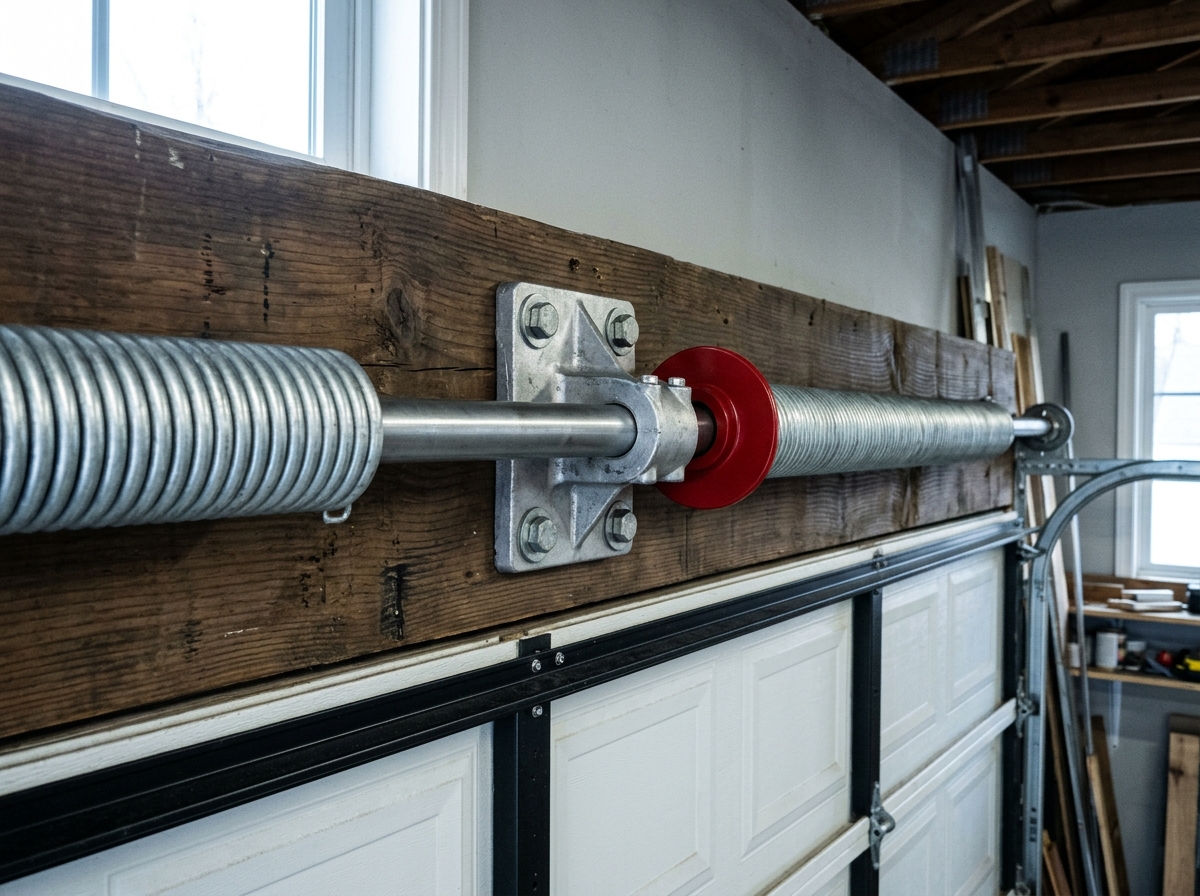
What mechanical or thermal hazard boundary applies here?
Visual engineering schematic detailing wound spring energy containment, ASHRAE A3 R-600a refrigerant recovery requirements, or IRC M1502.4.5 rigid dryer duct run clearances.
Which federal limits govern escalation for Car Trapped Behind Broken Garage Door Torsion Spring?
Quantitative safety gates across statutory penalties, NFPA/USFA fire telemetry, UL 325 entrapment ceilings, and EPA SNAP Rule 22 flammability thresholds.
| Safety Parameter | Threshold / Benchmark | Required Action |
|---|---|---|
| Door Weight Under Broken Spring | 150 - 350+ lbs unsupported | Keep door CLOSED; never pull red release cord while open |
| Wound Torsion Torque | 300 - 600 ft-lbs stored | Dispatch technician with solid winding bars |
| Photo-Eye Height (16 CFR 1211) | 6 inches max above floor [U.S. Consumer Product Safety Commission / eCFR] | Verify beam alignment after spring repair |
| Obstruction Reversal Limit | 2 seconds max [U.S. Consumer Product Safety Commission / eCFR] | Test 2x4 flat block reversal before normal use |
| CA SB-969 Replacement Penalty | $1,000 civil fine (CA) [California State Legislature] | Confirm integrated battery backup if replacing CA opener |
What step-by-step action sequence minimizes risk?
Follow this ordered residential triage sequence strictly in order before disconnecting hardware, activating doors, or hiring licensed emergency service.
- Inspect the torsion tube above the closed door for a visible 1-2 inch gap in the spring coils.
- Unplug the garage door opener motor to prevent remote activation.
- Keep family and pets clear of the door bottom.
- Call a qualified residential garage door technician with wound torsion bars to replace springs in matched pairs.
FAQ
Clear answers to 8 common repair, safety, cost, and licensing questions backed by official government records and manufacturer manuals.
When should homeowners evacuate and call 911 immediately instead of troubleshooting?
If you smell rotten-egg gas near a range, oven, or gas dryer, leave immediately without flipping switches, unplugging cords, or activating a garage opener, and call 911 outdoors.
What should you NEVER do when a garage torsion spring breaks with a car trapped inside?
Keep the door closed and never pull the red release cord while the door is raised; broken springs leave 150-350+ lbs of unsupported door weight overhead.
Why are post-2019 refrigerator cooling leaks restricted from DIY torch brazing?
Post-2019 residential refrigerators use ASHRAE Class A3 flammable R-600a isobutane capped at 150 grams under EPA SNAP Rule 22, requiring non-sparking EPA 608 tools.
What causes the majority of residential clothes dryer fires?
USFA reports ~2,900 residential clothes dryer fires annually with lint neglect (34%) as the leading cause; replace flexible foil ducts with smooth 4-inch rigid metal ducting.
How can homeowners verify a legitimate emergency locksmith during a lockout?
Insist on a written total quote upfront, reject $15-$29 call-out teasers, verify state license numbers where required, and refuse unnecessary drilling of standard deadbolts.
Should you trip the breaker before inspecting an overheating appliance?
Yes; disconnect AC power at the main breaker panel (unless gas odor is present, in which case evacuate without flipping switches) before checking lint or accessible traps.
Who should NOT attempt emergency torsion spring or gas valve repairs?
Homeowners without specialized winding bars, manometers, or EPA 608 certification must leave wound torsion springs, gas manifolds, and sealed cooling tubes to licensed technicians.
Do CodeBench emergency checklists replace utility or emergency dispatchers?
No; CodeBench provides triage checklists for out-of-warranty safety boundaries and always directs life-safety hazards to 911 or local gas/electric utilities first.
Related guides
Sources
- 16 CFR Part 1211 - Safety Standard for Automatic Residential Garage Door Operators — U.S. Consumer Product Safety Commission / eCFR, 2026-11-18 (retrieved 2026-11-23)
- Study of Life Expectancy of Home Components — National Association of Home Builders (NAHB), NAHB Component Lifespan Benchmarks (retrieved 2026-11-23)