
Garage Door Opens 6 Inches or Reverses: Photo-Eye Alignment & Wiring
When a residential garage door starts downward, reverses after touching nothing, or opens only 6 inches and stops, misaligned or damaged photoelectric safety beams under 16 CFR Part 1211 cause most false reversals. Federal law mandates optical photo-eyes mounted within 6 inches of the concrete floor and forced reversal within 2 seconds upon hitting a 2x4 test block.
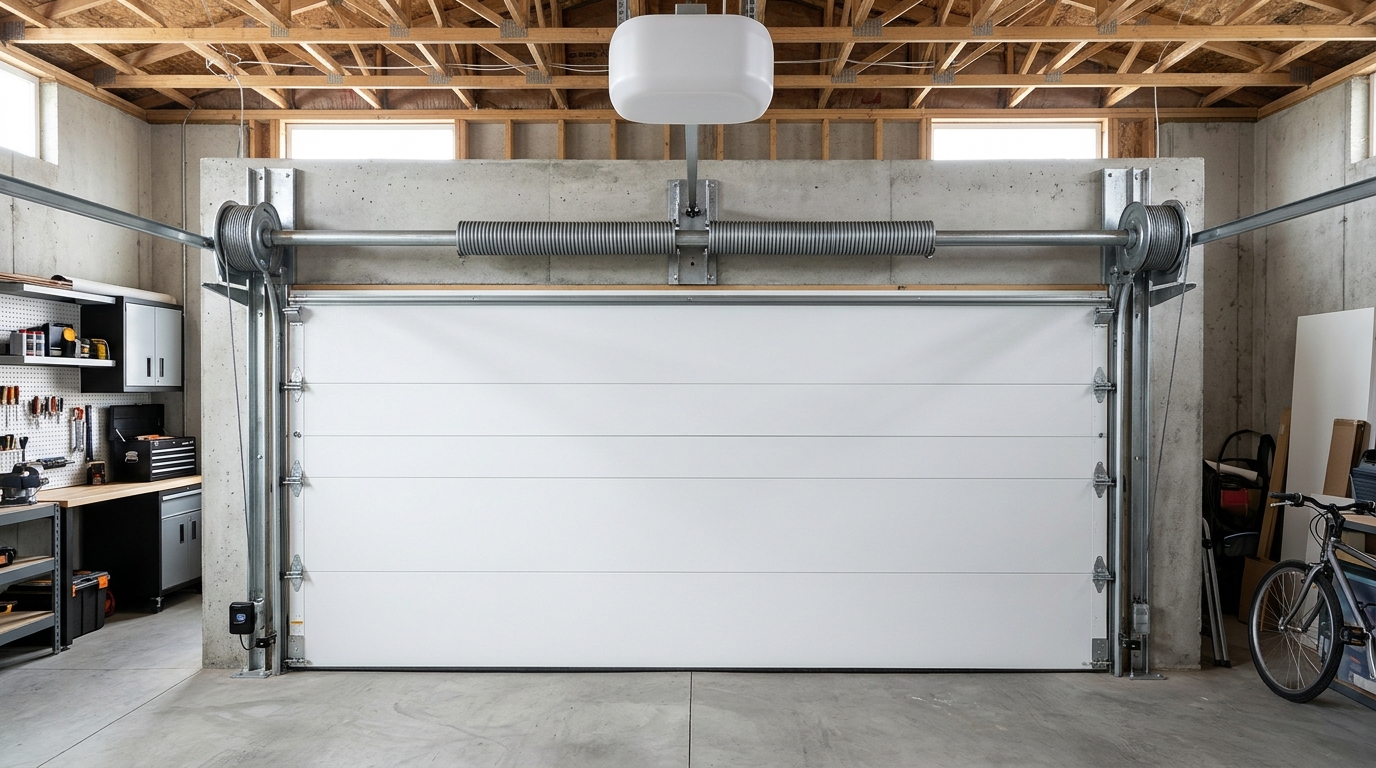
What federal safety limits govern residential garage photo-eyes?
Every residential automatic opener manufactured for U.S. homes since 1993 enforces strict beam height, travel reversal time, and wiring polarity protections.
- Max Sensor Floor Height
- 6 inches 16 CFR 1211.11
- Obstruction Reversal Max
- 2.0 seconds on 2x4 block
- Safe DIY Reset Window
- $0 - $45 wire / bracket kit
- Pro Escalation Trigger
- Spring gap broken torsion coil
Why does a garage door reverse or blink without visible track objects?
Sending and receiving photo-eyes use focused infrared LEDs easily knocked off-axis by trash cans, broom handles, or low winter sun angles.
- Solid amber sender, blinking green receiver: Bending the sheet-metal wall bracket gently until the green LED turns solid fixes over 70% of floor-beam alignment complaints.
- Direct afternoon sun washing out receiver lens: Tape a matte black 2-inch cardboard hood around the shadowed receiver bezel or swap sending/receiving sides out of direct glare.
- Stapled low-voltage bell wire shorts: Inspect the 2-conductor white/striped thermostat cable along ceiling joists for pinched drywall staples causing intermittent open circuits.
When does stopping at 6 inches indicate a broken torsion spring instead of sensors?
Photo-eyes block downward travel only; if an opener groans and halts 6 inches off the floor while lifting upward, inspect the overhead torsion shaft immediately.
- Visible 2-inch gap inside overhead spring coils: A fractured torsion spring drops ~300 lbs of dead panel weight directly onto the motor gear assembly—stop operating immediately.
- Hold-to-close wall button bypass test: Holding the inside wall button continuously down isolates a floor sensor fault vs a stripped nylon drive gear or logic board fault.
Who should choose DIY diagnostics vs hiring a licensed specialist?
Distinguish safe floor-level sensor realignment from dangerous spring or cable tension repairs. Compare statutory rules, regional BLS trade wages, and mechanical hazard boundaries carefully before commissioning repairs.
Fits blinking green LEDs when door opens smoothly by hand with spring intact.
Avoid when: Never bypass photo-eyes permanently or raise brackets above 6 inches.
Mandatory if torsion spring shows a gap, steel cables are slack, or door feels >15 lbs manually.
Avoid when: Pulling red release cord while a heavy door is stuck overhead.
What are the limitations of these technical reference tables?
CodeBench benchmark lists trace to U.S. government open datasets, eCFR standards, and state statutes as of 2026 and are not a substitute for active factory warranties, municipal permits, or commercial engineering stamps.
Who should NOT rely on this list
- Who should NOT rely on out-of-warranty benchmarks: owners inside a 1-year warranty or open recall should contact the manufacturer first.
- Not a substitute for licensed trade permits on 240V circuits, gas manifolds, sealed cooling loops, or torsion springs.
- Not an affiliated OEM service desk: CodeBench maintains independent verification records only.
Which option fits your situation?
- Safe DIY checks: Limit work to unplugged cleaning, coin traps, serial decoding, and low-voltage photo-eye alignment.
- High-energy or sealed components: Escalate R-600a lines, 240V relays, gas valves, and wound torsion springs to qualified pros.
Which diagnostic tools and state hubs connect to this topic?
Use the linked CodeBench datasets, model directories, and state wage/licensing hubs below to verify parts, labor benchmarks, and municipal contractor registries.
Related guides
Sources
- 16 CFR Part 1211 - Safety Standard for Automatic Residential Garage Door Operators — U.S. Consumer Product Safety Commission / eCFR, 2026-11-18 (retrieved 2026-11-23)
- OEM Service & Owner Manuals (GE, Whirlpool, LG, Samsung, Frigidaire, Bosch, Speed Queen, LiftMaster, Chamberlain, Genie, Wayne Dalton, Schlage, Kwikset) — Respective Equipment Manufacturers, 2020-2026 OEM Technical Publications (retrieved 2026-11-23)
- Study of Life Expectancy of Home Components — National Association of Home Builders (NAHB), NAHB Component Lifespan Benchmarks (retrieved 2026-11-23)