
R-600a (Isobutane) vs R-134a Refrigerator Sealed-System Comparison
Under EPA SNAP Rule 22 and UL 60335-2-24, post-2019 U.S. residential refrigerators transitioned from non-flammable R-134a to ASHRAE A3 flammable R-600a isobutane (150g charge cap). Compare operating pressure, service risks, and 50% replacement rules before out-of-warranty repair. Review the full attribute comparison matrix, applicability limits, and cited regulatory thresholds between R-600a (Post-2019) and R-134a (Legacy Pre-2019) below before ordering out-of-warranty hardware.
- ASHRAE Safety Class
- Class A3 (Flammable Hydrocarbon) vs Class A1 (Non-Flammable HFC)
- EPA Charge Limit
- 150 grams max (UL 60335-2-24) vs Legacy HFC charge (~110-170g)
- Global Warming Potential (GWP)
- GWP 3 (isobutane) vs GWP 1,430 (HFC-134a)
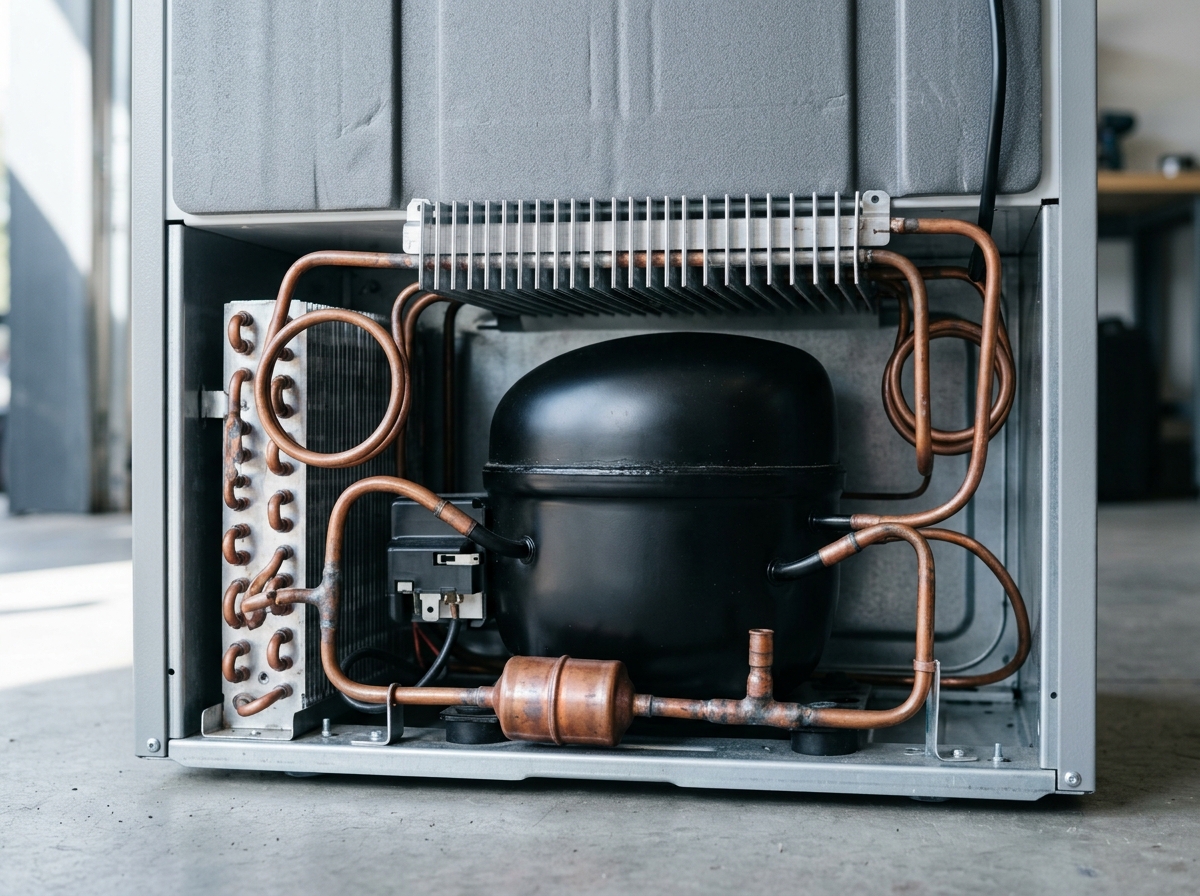
What physical, spectrum, or door-prep standards distinguish these specs?
Side-by-side engineering schematic comparing refrigerant recovery clearances, RF trunk interference spectra, or North American deadbolt cross-bore tolerances.
How do R-600a (Post-2019) and R-134a (Legacy Pre-2019) differ across key attributes?
Attribute-by-attribute specification matrix contrasting cycle counts, regulatory caps, statutory applicability, and field service procedures with primary citations.
| Specification / Attribute | R-600a (Post-2019) | R-134a (Legacy Pre-2019) |
|---|---|---|
| ASHRAE Safety Class | Class A3 (Flammable Hydrocarbon) [U.S. Environmental Protection Agency (EPA)] | Class A1 (Non-Flammable HFC) |
| EPA Charge Limit | 150 grams max (UL 60335-2-24) [U.S. Environmental Protection Agency (EPA)] | Legacy HFC charge (~110-170g) |
| Global Warming Potential (GWP) | GWP 3 (isobutane) | GWP 1,430 (HFC-134a) |
| Compressor Suction Pressure | Often sub-atmospheric (vacuum) | Positive low-side (~0 to 15 psi) |
| NAHB Refrigerator Lifespan | 13 years (freezer 11 yrs) [National Association of Home Builders (NAHB)] | 13 years (nearing end-of-life) [National Association of Home Builders (NAHB)] |
| EPA RAD Utility Recycling | $25 - $100 via participating utilities [U.S. Environmental Protection Agency (EPA)] | $25 - $100 via participating utilities [U.S. Environmental Protection Agency (EPA)] |
| US Avg Electricity Rate | 18.16 cents/kWh (EIA Aug 2026) [U.S. Energy Information Administration (EIA)] | 18.16 cents/kWh (older units use +30-60%) [U.S. Energy Information Administration (EIA)] |
| DIY Piercing / Brazing | PROHIBITED (Ignition / Explosion Risk) | PROHIBITED (EPA 608 Recovery Required) |
When does R-600a (Post-2019) apply over R-134a (Legacy Pre-2019)?
Applies to post-2019 ENERGY STAR refrigerators and freezers; requires EPA 608 certification, non-sparking vacuum pumps, and ultrasonic/nitrogen pressure testing.
When does R-134a (Legacy Pre-2019) apply over R-600a (Post-2019)?
Applies to pre-2019 units nearing or past the 13-year NAHB refrigerator median lifespan; sealed-system repair rarely passes the 50% net replacement rule.
What quantitative rule settles the choice between both specs?
50% Threshold = (Retail Price - $75 EPA RAD - 5-yr kWh savings) * 0.50. Example: ($1,450 - $75 - $185) * 0.50 = $595 cap.
What are the limitations of ENERGY STAR chassis lists?
ENERGY STAR catalog pages benchmark annual kWh draw and capacity across 8 certified residential chassis and exclude non-certified budget models, commercial NSF units, and live retail stock prices.
Who should NOT rely on this list
- Who should NOT rely on residential kWh tables: commercial kitchens and coin-op laundries require industrial ratings.
- Not a substitute for tape measurement: verify cutout width, door swing, and 1-2 inches rear condenser airflow clearance.
- Not a parts store: finish suffixes collapse onto one appliance models, and regional retail availability varies.
Which option fits your situation?
- High electricity rate states: Target top-quartile lowest-kWh models to maximize 10-year EIA utility savings.
- Tight 24-inch or 33-inch alcove swap: Match exact cutout width first, then compare peer energy density.
- Out-of-warranty repair decision: Look up your appliance models kWh and run the 50% repair-vs-replace calculation.
FAQ
Clear answers to 8 common repair, safety, cost, and licensing questions backed by official government records and manufacturer manuals.
What is the primary technical difference between R-600a (Post-2019) and R-134a (Legacy Pre-2019)?
Under EPA SNAP Rule 22 and UL 60335-2-24, post-2019 U.S. residential refrigerators transitioned from non-flammable R-134a to ASHRAE A3 flammable R-600a isobutane (150g charge cap). Compare operating pressure, service risks, and 50% replacement rules before out-of-warranty repair.
When does R-600a (Post-2019) apply over R-134a (Legacy Pre-2019)?
Applies to post-2019 ENERGY STAR refrigerators and freezers; requires EPA 608 certification, non-sparking vacuum pumps, and ultrasonic/nitrogen pressure testing.
When does R-134a (Legacy Pre-2019) apply over R-600a (Post-2019)?
Applies to pre-2019 units nearing or past the 13-year NAHB refrigerator median lifespan; sealed-system repair rarely passes the 50% net replacement rule.
What quantitative decision formula governs R-600a (Post-2019) vs R-134a (Legacy Pre-2019)?
Before scheduling repairs or ordering parts between R-600a (Post-2019) and R-134a (Legacy Pre-2019), verify physical rating plates, review the attribute diff table above, and confirm active OEM warranty or safety recall eligibility.
Who should NOT confuse these two specifications?
Homeowners and independent technicians must match physical rating plates, learn-button colors, or keyway profiles directly before ordering incompatible parts.
Are commercial units covered by these residential comparisons?
No; CodeBench comparisons strictly target residential out-of-warranty appliances, residential locks, and residential garage operators.
Should active warranty or recall units follow this comparison?
Check your 1-year OEM warranty and open CPSC/NHTSA recall bulletins first; active factory recalls provide zero-charge OEM remedies.
How are the specs in this comparison verified?
Every threshold traces to primary government rules (EPA, eCFR, FTC, NAHB, BHMA) or OEM technical manuals cited at the bottom of this page.
Related guides
Sources
- SNAP Substitutes in Household Refrigerators and Freezers (Rule 22, R-600a) — U.S. Environmental Protection Agency (EPA), SNAP Rule 22 (retrieved 2026-11-23)
- Study of Life Expectancy of Home Components — National Association of Home Builders (NAHB), NAHB Component Lifespan Benchmarks (retrieved 2026-11-23)
- EPA Appliance Disposal & Responsible Appliance Disposal (RAD) Program — U.S. Environmental Protection Agency (EPA), 2026 (retrieved 2026-11-23)
- Electric Power Monthly Table 5.6.A: Average Price of Electricity to Residential Customers by State — U.S. Energy Information Administration (EIA), August 2026 & August 2025 (retrieved 2026-11-23)